
What Is Quiet Luxury? How Contemporary Art Defines Luxury Interiors
For the last few years, quiet luxury has become one of the most influential ideas in interior design. What began as a fashion movement has evolved into a broader philosophy that now shapes architecture, hospitality and residential interiors alike. Today, the term appears everywhere, from boutique hotels and luxury property developments to furniture collections and design magazines.
Yet despite its popularity, quiet luxury is often misunderstood.
It is frequently reduced to a palette of warm neutrals, limewashed walls, travertine, boucle furniture and oversized linen sofas. Browse social media for inspiration and it quickly becomes apparent that "quiet luxury" has become a visual formula. Calm colours. Natural textures. Restrained styling.
But that isn't what quiet luxury was ever meant to be.
At its heart, quiet luxury is less about what a room looks like and more about how it makes you feel. It is an approach to design that values craftsmanship over branding, permanence over trends and thoughtful composition over visual excess. It rewards attention rather than demanding it.
Perhaps that explains why so many of the world's most admired interiors don't immediately announce themselves. They unfold slowly.
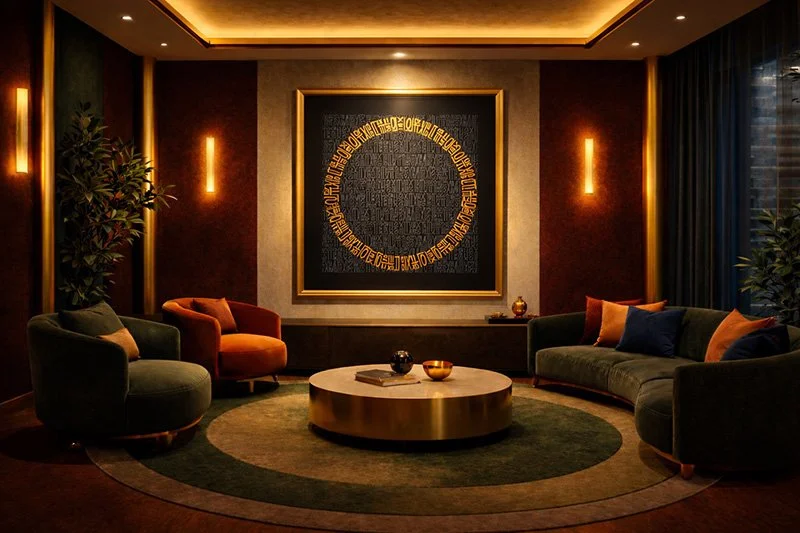
Insomnia by Five46 for Landson Studios
Quiet Luxury Is a Philosophy, Not a Style
One of the reasons quiet luxury has become so difficult to define is because it is not tied to a particular aesthetic.
Unlike Mid-century Modern or Art Deco, quiet luxury has no strict visual rulebook. Instead, it is guided by a series of design principles that prioritise longevity, authenticity and restraint.
These ideas are evident throughout the work of Belgian designer and art dealer Axel Vervoordt, whose interiors have influenced generations of architects and designers. His spaces combine ancient artefacts, contemporary art, natural materials and carefully edited architecture to create rooms that feel timeless rather than fashionable. Rather than decorating for impact, Vervoordt speaks of creating homes that evoke emotion, silence and balance. His work has become so influential that Architectural Digest credits him with shaping many of the interior design trends we now associate with understated luxury.
This is an important distinction.
Quiet luxury is not about owning fewer things.
It is about owning better things.
Why the World's Best Interiors Rarely Feel Finished
There is an interesting quality shared by many exceptional interiors.
They never feel completely resolved.
Whether you are looking at a restored Belgian farmhouse, a Manhattan apartment or a contemporary villa in the Mediterranean, the most memorable spaces often retain a sense of evolution. Antique furniture sits comfortably beside contemporary design. Handmade ceramics soften precise architectural lines. Textures change subtly as natural light moves through the day.
Nothing feels overly coordinated.
Everything feels intentional.
This approach has become increasingly visible across leading design publications, where homes are celebrated not for their perfection but for their individuality. Even recent projects by Vervoordt continue to explore this balance between stillness and character, using reclaimed materials, natural light and carefully curated artworks to create spaces that feel deeply personal rather than simply luxurious.
It is a reminder that luxury is not achieved by removing personality.
It is achieved by refining it.
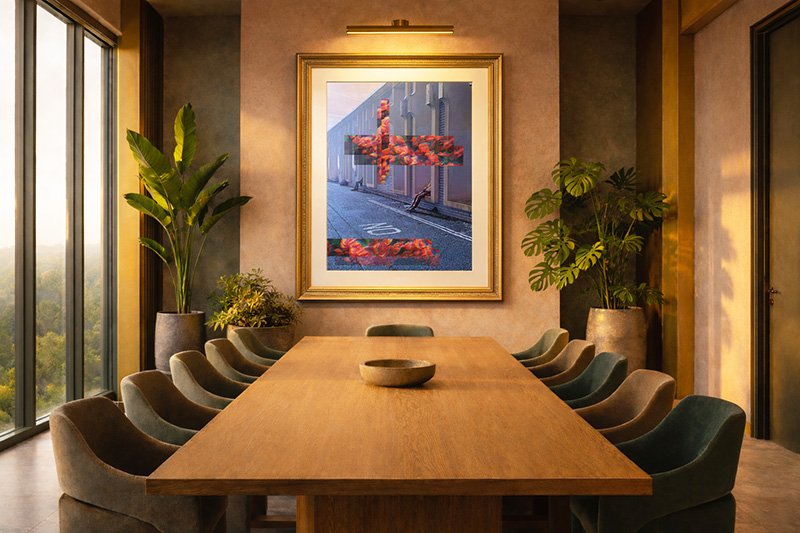
Demure Daydream by Rix for Landson Studios
Materials Matter, But Meaning Matters More
There is no denying that quiet luxury has its own material language.
Natural stone.
Solid timber.
Linen.
Lime plaster.
Bronze.
These materials appear repeatedly because they age gracefully and improve with time. They develop patina, absorb light differently throughout the day and reveal the hand of the maker rather than the machinery that produced them.
Yet materials alone cannot create atmosphere.
A beautifully crafted room without personal meaning risks becoming little more than an expensive showroom.
The finest interiors understand that emotional value carries as much weight as material value. A room becomes memorable not because every object is expensive, but because every object appears to belong.
The Role of Contemporary Art in Quiet Luxury Interiors
This is where contemporary art occupies a unique position.
Unlike a dining table or a sofa, artwork is rarely chosen for practical reasons. It is one of the few elements within an interior that exists almost entirely to communicate taste, curiosity and identity.
For interior designers, artwork often provides what the room has been quietly preparing for all along. It introduces rhythm into restrained compositions, contrast within neutral palettes and emotional depth where architecture alone cannot.
This does not necessarily mean choosing the largest or boldest piece in the room.
Some of the most successful interiors use art with remarkable restraint. A single work placed thoughtfully within generous negative space can carry far greater presence than an entire gallery wall.
Museums have understood this principle for decades. Empty wall space is not wasted space. It allows the artwork to breathe, encouraging visitors to slow down and spend longer with each piece.
The same principle applies within the home.
Quiet Luxury Is Already Evolving
Like every influential design movement, quiet luxury continues to evolve.
Increasingly, designers are moving away from interiors that feel perfectly styled towards spaces that feel collected over time. Recent commentary in Homes & Gardens has highlighted the rise of "found luxury", where reclaimed materials, antiques and personal objects take precedence over perfectly coordinated schemes. Similarly, the Financial Times has noted a growing appreciation for Belgian minimalism, a design language rooted in atmosphere, authenticity and emotional restraint rather than display.
This evolution feels significant.
The conversation is shifting away from buying the right furniture and towards creating homes with genuine character.
In many ways, that was always the point of quiet luxury.
Not to own less.
Not to spend more.
But to surround yourself with objects that continue to reward your attention long after the novelty has faded.
Designing a Quiet Luxury Interior
While there is no formula, certain principles appear consistently across the world's most enduring interiors.
Choose natural materials that improve with age rather than those designed to imitate them.
Allow negative space to give architecture, furniture and artwork room to breathe.
Layer texture instead of relying on excessive colour.
Mix contemporary pieces with objects that carry history or craftsmanship.
Build a home gradually rather than trying to complete it in a single season.
Above all, choose pieces because they resonate with you, not because they currently dominate social media.
The most memorable interiors are rarely assembled from a shopping list.
They evolve through curiosity, patience and confidence.
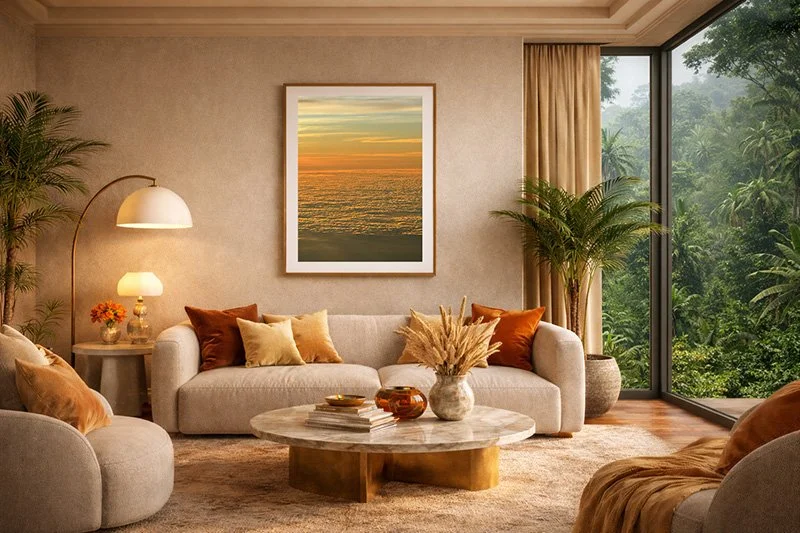
Above the Clouds Photography Print by Dakota for Landson Studios
Final Thoughts
Quiet luxury has become one of the defining design movements of the past decade, but its greatest lesson has very little to do with colour palettes or furniture trends.
It reminds us that the most elegant interiors are rarely the loudest.
They invite us to slow down.
To notice texture before colour.
Craftsmanship before branding.
Atmosphere before decoration.
Perhaps that is why contemporary art feels so naturally at home within quiet luxury interiors. Like the finest architecture, it rewards repeated viewing. It asks questions rather than providing instant answers. It becomes part of the identity of a room, not because it dominates the space, but because it gives the space something worth returning to.
Continue Exploring Contemporary Art
If you're designing a quiet luxury interior, the artwork you choose should feel as considered as the architecture that surrounds it.
Explore Landson Studios' curated collection of limited edition contemporary artworks, created for collectors, interior designers and thoughtfully designed spaces where every piece has room to breathe.